
Mediation Services in NJ, NY & Virtually | TRP Mediation
Resolve business, property, civil, and workplace disputes through confidential mediation. Serving New Jersey, New York, and virtual clients.
Mediation Services
Practical, confidential mediation for the disputes that keep you up at night.
Every service below kind of follows the same core process, you know: a neutral, structured talk, either jointly or in private caucus sessions, guided by an impartial professional mediator who has no stake in whatever result. The goal stays pretty much the same as well, to help both sides land on an agreement they truly helped shape, not with the cost, the delay, or the damage that usually comes from a courtroom fight. Sessions are available in person across Bergen, Passaic, Essex, Hudson, Union, Middlesex, and Morris Counties in New Jersey, plus Manhattan, Brooklyn, Queens, the Bronx, Staten Island, Westchester, and Rockland Counties in New York, or if you prefer everything fully virtually from anywhere.
Please note: Billivan Johnson is a trained and qualified professional civil mediator, not an attorney, and is a member of the New Jersey Association of Professional Mediators (NJAPM) and Mediators.com. All services provide legal information, not legal advice, and nothing discussed during mediation replaces the counsel of a licensed attorney.


Business & Financial Disputes.
Running a business is hard enough without a financial dispute threatening to derail it.
We help business owners and partners, business owners/customers/vendors disputes.
Contract breaches. When one side believes the other didn't hold up their end of an agreement, positions harden fast. Mediation creates space to look past who's "right" and focus on a resolution that actually works — a revised payment plan, a corrected deliverable, or a negotiated release from the agreement entirely.
Unpaid book accounts. Trying to track down money that’s owed to your business is pretty stressful, it takes a lot of time, and it can just linger for months, especially once things turn into formal collections. Mediation usually helps settle these arguments in one or two sessions, and it lets both parties align on a payment plan, without paying the price of court, or causing the kind of ripple that harms a business relationship you may actually want to keep intact.
Dissolving small business partnerships. Honestly, few things feel more painful than seeing a business relation kind of fall apart, particularly when money, equity, or reputation is tangled in the mix. Mediation gives parties a way to work through both the practical and the personal side of a split… things like divvying up assets, wrapping up unresolved duties, and moving on without an expensive long-winded legal showdown.
Neighbors Disputes / Landlord and Tenants Disputes
Disputes involving where you live or the property you own tend to be some of the most emotionally charged, because there's often no easy way to simply walk away from the other party.
We help with:
Landlord tenant friction can get messy fast. Like disputes over repairs, so sudden and heated lease violations, then nonpayment issues and arguments about the security deposit. On both sides people can act like it’s the end of the world, but mediation usually gives a quicker, less combative route than going straight to housing court, and it often helps keep some kind of working relationship going, the sort of thing that eviction proceedings pretty much ruin.
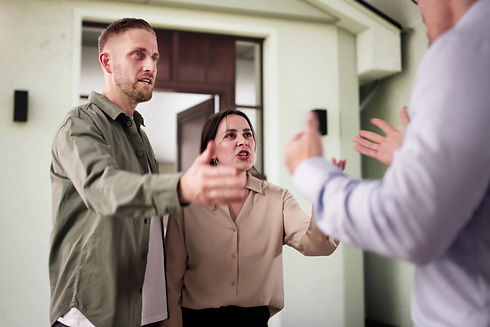
Neighbor versus neighbor disputes, most of the time those boundary line things and the noise complaints, property damage, and all the small everyday frictions between neighbors don’t really need a full on lawsuit. It’s usually more like, they need a talk. Not just any talk either, but a conversation that’s guided by a neutral mediator, somebody trained to keep it flowing in a practical direction, even when people are mad or just, worn out. Mediation can help neighbors get to a workable agreement, so they can continue sharing the same space, instead of being stuck in that repetitive loop.
New Jersey Civil Court Cases
Personal injury disputes. When both parties really want to dodge the time and expense of an actual trial, mediation can be a quicker, private route to settle things, in a way that feels fair. Mediation allows the parties to freely express themselves and to have an open and honest dialogue. I as the mediator facilitate communication and negotiation between the parties so that they can come to a voluntary and mutually beneficial agreement.
Property damage claims. If the damage occurred between neighbors, with contractors, or even acquaintances, mediation helps each side find common ground and land on a settlement, without paying for the whole formal litigation fight. Often it keeps everything more affordable, discreet, and faster too.
Employment disputes. Disagreements between employers and employees — over separation terms, workplace conflict, or contractual issues — often benefit from a neutral third party who can help both sides find common ground while protecting working relationships wherever possible.
Organizational disputes. Conflicts within nonprofits, associations, and other organizations can threaten the mission itself. Mediation helps stakeholders resolve internal disagreements without public fallout.
Employment / Workplace Disputes
Mediation is a powerful tool for resolving a wide spectrum of workplace conflicts, often serving as a more cost-effective, faster, and less adversarial alternative to formal litigation or administrative proceedings. It is particularly beneficial in situations where preserving a working relationship or addressing the underlying human elements of a dispute is important.
1. Interpersonal Conflicts and Communication Breakdowns. This is perhaps the most common area for mediation, addressing issues that stem from friction between individuals or within teams. Personality Clashes and Working Style Differences: Mediation helps parties understand each other's perspectives and find common ground for collaboration.
2. Employment Actions and Performance Issues. Disagreements related to job status and performance can often be de-escalated through mediation.
3. Discrimination, Harassment, and Civil Rights Claims. While serious, many claims of discrimination and harassment are well-suited for mediation because the parties often have complex needs beyond just financial compensation. Workplace Harassment and Discrimination: These high-charge cases often benefit from mediation, which allows the impacted employee to feel heard and can lead to solutions beyond monetary damages, such as policy changes, official apologies, or training mandates. Many federal and state agencies, like the EEOC, recommend or even require mediation for such claims.